
By Chef Alexx F. Guevara, CCC, CFGC
I have walked into kitchens where every cabinet told a story. Protein powders the client swore by for years and never really felt. A drawer full of vitamin D that never moved the needle on their labs. A refrigerator stocked with "clean" food that still left them tired, inflamed, and frustrated. The clients were not failing their plans. The plans were failing them, because those plans were written for a person that does not exist: the statistical average. Nutrigenomics testing changes that equation. This guide covers what it is, how it works, what it can tell you, and how to actually use the results.
What Is Nutrigenomics Testing?
Nutrigenomics testing is a DNA-based process that reveals how your genetic variants influence the way your body responds to food and nutrients. It is not medical genetic testing designed to diagnose disease. A disease-risk test looks for mutations linked to hereditary cancer or Huntington's disease. A nutrigenomic test examines common single-nucleotide polymorphisms, or SNPs, that shape how well you absorb folate, metabolize fat, break down caffeine, or process carbohydrates. The goal is dietary precision, not diagnosis.
Registered dietitian Devon Peart, RD, at Cleveland Clinic describes it as "a way to zoom in on what will help you reach your goals based on what we know about your genes and how they interact with the food you eat." That precision is what separates genetic nutrition testing from every generic eating plan that came before it.
How Does Nutrigenomics Testing Work?
The process has three distinct steps.
Step one, the DNA sample: Most nutrigenomic tests use a simple cheek swab or saliva collection kit sent directly to your home. You register the kit, collect the sample, and mail it to the laboratory. No needles, no clinic visit required.
Step two, SNP analysis: The lab extracts DNA and reads specific positions in your genome using a validated SNP array. Reputable labs analyze hundreds to thousands of gene variants relevant to nutrition, fitness, and metabolic function. The genotyping process is highly accurate, exceeding 99% for validated SNPs, according to FitnessGenes.
Step three, the personalized report: Your genotype data is run through an interpretation algorithm and returned as a report, usually a PDF, organized by category: macronutrient response, vitamin needs, food sensitivities, and fitness traits.
Here is where most people hit a wall. The report arrives, gets read once, and sits in a downloads folder. A PDF does not cook dinner or tell you what to do with the fact that you carry two copies of the FTO risk allele. At Mechanixx of Health, we take the report, translate it into a written kitchen blueprint specific to your goals, and cook the food. That translation is where the science becomes a meal plan you can actually live with.
What Can a Nutrigenomics Test Tell You?
A well-designed genetic nutrition test covers four major categories. These are the same categories currently featured in Google's AI Overviews on nutrigenomics testing, and for good reason: they reflect where the peer-reviewed evidence is strongest.
Macronutrient Metabolism
Your genes influence how well your body processes carbohydrates, fats, and proteins, and in what proportions each macronutrient serves you best.
The FTO gene is one of the most studied examples. People with the AA risk allele experienced a two-fold greater loss of total body fat on a high-protein diet compared to a low-protein diet, according to a 2012 study in Diabetes cited by Nutrigenomix. The TCF7L2 gene tells a different story. Carriers of the TT genotype of rs7903146 face significantly elevated diabetes risk on a high-glycemic-load diet, with one study showing odds of type 2 diabetes more than 2.7 times higher than the GG genotype, per research in The American Journal of Clinical Nutrition. For TCF7L2 TT carriers, carbohydrate quality, not just quantity, is a matter of metabolic health.
Vitamin and Mineral Needs
Many people are deficient in nutrients despite adequate dietary intake, and genetics explain a significant portion of why.
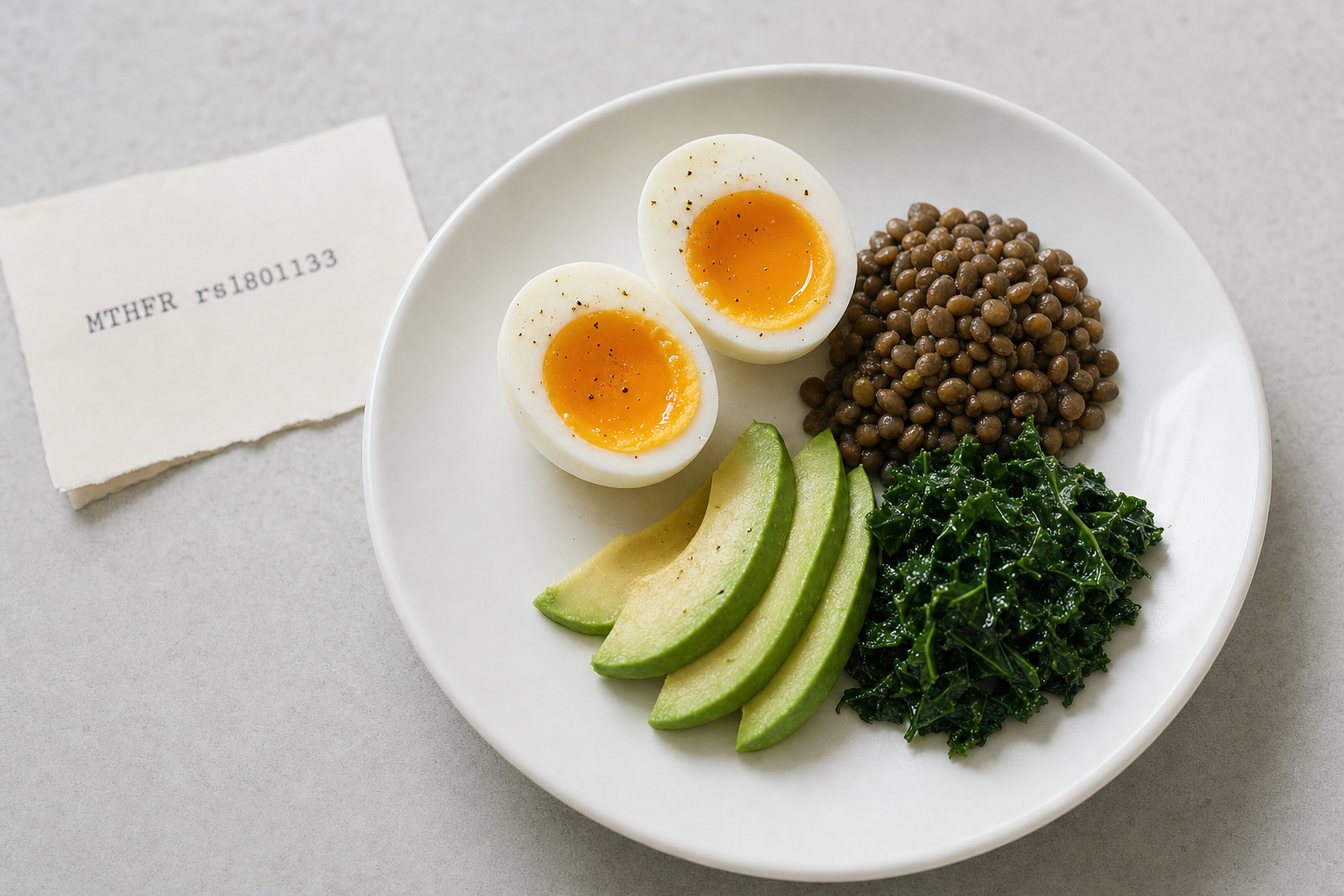
The MTHFR gene (C677T variant) affects how efficiently your body converts folate into its active form. The TT genotype reduces enzyme activity, impacting methylation, DNA repair, and mood chemistry, per the NIH gene database. VDR variants, found in roughly 30 to 50% of people, affect how well cells respond to circulating vitamin D and may require higher supplementation doses to achieve the same cellular effect, per SelfDecode. HFE variants regulate iron absorption and can signal risk for hereditary hemochromatosis, where dietary strategies like avoiding vitamin C supplements with iron-rich meals offer direct protection, as outlined by the Mayo Clinic.
Food Sensitivities
Some of the most actionable findings in a nutrigenomic report involve how your body handles specific foods and compounds.
The LCT/MCM6 variant (rs4988235) determines whether your body continues producing lactase into adulthood. People with two C copies are predisposed to lactose non-persistence. Approximately 65% of the global population shows some degree of reduced lactase production after infancy, per FitnessGenes. The CYP1A2 gene divides the population into fast and slow caffeine metabolizers. Slow metabolizers, 54% of the population, face elevated cardiovascular risk at high caffeine intake, including greater risk of high blood pressure and heart attack, per Nutrigenomix. HLA-DQ2 and HLA-DQ8 variants flag predisposition to celiac disease; as NIH Genome.gov notes, direct-to-consumer testing can estimate celiac risk through HLA-DQA1 and HLA-DQB1 variants.
Fitness and Recovery
Nutrigenomic testing extends beyond the plate into how your body responds to training, manages oxidative stress, and recovers.
CYP1A2 reappears here because caffeine metabolism affects endurance performance, not just cardiovascular health. Sports nutrigenomics research in Frontiers in Nutrition identifies it as directly relevant to performance optimization. GSTT1 variants affect vitamin C utilization; deletion genotypes carry greater risk of vitamin C deficiency under exercise-induced oxidative stress. VDR variants influence bone health, immune function, and recovery from training. For active clients, these findings translate into specific supplement doses and food choices built around their recovery profile.
Is Nutrigenomics Testing Worth It?
Yes, with an important condition: the test is only as useful as what you do with the results.
The strongest clinical evidence comes from the NOW Trial (Horne et al., 2020, BMJ Nutrition, Prevention & Health, n=140). Only the nutrigenomics-guided group significantly reduced total fat intake at 12 months, dropping from 36.0% to 30.2% of calories (p=0.02). Long-term adherence to fat and saturated fat guidelines was significantly greater in the nutrigenomics group. The researchers concluded that the approach "can motivate long-term improvements in dietary fat intake above and beyond gold-standard population-based interventions."
The honest limitations are worth naming. Nutrigenomic testing does not override environment, habits, stress, or sleep. A report alone changes nothing. As Devon Peart, RD, of Cleveland Clinic notes, "nutrigenomics can't eliminate all of the trial-and-error when it comes to diet, supplements and workout routines." The evidence is strongest for specific gene-nutrient interactions: caffeine, lactose, iron, and folate. Broad diet-type matching by genotype alone remains more contested.
Testing without translation is just data.
How Accurate Is Nutrigenomic Testing?
Accuracy here requires two separate answers, because there are two different things being measured.
The genotyping itself, meaning the process of reading your DNA at specific SNP positions, is highly reliable. For validated SNPs on quality arrays, accuracy exceeds 99%, according to FitnessGenes. If the test says you carry the MTHFR C677T TT genotype, that reading is almost certainly correct.
Interpretation accuracy is a different story. What a genotype means for your health, and how strongly it predicts any outcome, is much less certain. As Cleveland Clinic puts it, "Genetic tendencies are forecasts, not guarantees." Most nutrigenomic findings describe population-level tendencies, not individual certainties.
The most rigorous dietary trial in this space, the Stanford DIETFITS study, found that genotype patterns did not predict whether participants lost more weight on a low-fat versus low-carb diet. This is an important balance: the evidence is most robust for single biochemical interactions, CYP1A2 and caffeine, MTHFR and folate, HFE and iron, LCT and lactose. It is weaker for broad diet-type matching by genotype alone.
One additional limitation: most underlying research was conducted in people of European ancestry. Allele frequencies and effect sizes can differ across ethnic backgrounds, per the International Society of Nutrigenetics and Nutrigenomics. Interpretation should account for ancestral context when available.
Want this guide as a printable PDF?
Download the complete guide to read offline, share with your doctor, or bring to your next consultation. We will email the link and add you to occasional updates from Chef Alexx. Unsubscribe anytime.
Nutrigenomics Testing vs. Standard Nutrition Advice
Standard nutrition advice is built on population averages. Eat more vegetables. Cut saturated fat. Reduce sodium. Those recommendations are not wrong, but they are written for an average of millions of people, a person no one individual actually is.
Consider two clients in the same wellness program. Same food, same calorie targets, same registered dietitian. At 12 months, one thrives. The other plateaus and quits. The difference is invisible on any standard intake form.
One of them carries the MTHFR C677T TT genotype. Her body converts synthetic folic acid less efficiently. The fortified grain products in her "healthy" diet are not delivering the folate her methylation cycle needs. The other carries the CYP1A2 CC variant. He processes caffeine slowly, and the two cups of coffee he drinks daily to push through afternoon workouts are quietly raising his blood pressure and disrupting his sleep recovery. Standard advice told both of them to eat well and move more. It had no way to account for the biology underneath.
Nutrigenomic testing does not replace clinical nutrition care. It adds a layer of specificity that makes care more precise. The goal is to stop guessing. Standard advice is built for an average that does not exist.

Is Nutrigenomics Testing Covered by Insurance?
Usually no. Most nutrigenomic tests, including all direct-to-consumer kits, are paid out of pocket.
NIH Genome.gov is direct: because direct-to-consumer genetic tests are not diagnostic, health insurers typically do not cover them. GoodRx confirms that genetic nutrition testing is usually out of pocket, though clinical testing ordered by a physician may be covered if it meets medical necessity criteria.
One practical option worth knowing: some tests, including the 3X4 Genetics panel, are HSA and FSA eligible. 3X4 Genetics confirms their $299 test qualifies for pre-tax payment.
Think of it as a one-time investment. You do not re-test your DNA every year. The information is yours for life, and the dietary adjustments it informs compound over time in ways that generic advice rarely does.
How to Get Nutrigenomics Testing and What to Do With the Results
There are two paths.
The first is direct-to-consumer. Companies like Nutrigenomix, 3X4 Genetics, SelfDecode, and GenoPalate offer at-home kits from roughly $100 to $400. You order online, collect a sample, mail it back, and receive a digital report. The limitation is interpretation: a report showing FTO risk alleles or a VDR Fok-I variant is useful only if you know what to actually eat differently.
The second path is professional-guided, the approach the clinical evidence supports most strongly. Working with a practitioner who translates results into a real food plan is where the benefit lives.
At Mechanixx of Health, the process runs in three stages. First, we order or review the test. Second, we build a written Genetic Kitchen Blueprint: a practical document mapping your SNPs to food choices, cooking methods, macronutrient targets, and supplement considerations. Third, for clients who want full execution, our private chef service handles the cooking so the plan never stalls at the grocery store.
If you are ready to stop guessing and start eating for your actual biology, the first step is a consultation. Book yours here.
Frequently Asked Questions
Is nutrigenomics testing worth it?
For most people who commit to acting on the results, yes. The NOW Trial (Horne et al., 2020) found that nutrigenomics-guided participants showed significantly greater long-term dietary fat adherence at 12 months compared to a standard lifestyle program. The caveat is consistent across the research: the test is only useful when paired with implementation. A report sitting in a downloads folder changes nothing.
How does nutrigenomics testing work?
You collect a cheek swab or saliva sample at home and mail it to a laboratory. The lab reads specific positions in your DNA, called SNPs, using a validated array. Your genotype at each position is matched to peer-reviewed research on how that variant affects nutrition response. The results arrive as a report organized by category: macronutrient metabolism, vitamin needs, food sensitivities, and fitness traits, according to Cleveland Clinic.
What are the benefits of nutrigenomics testing?
The core benefit is precision. Instead of following population-average dietary guidelines, you receive information specific to your biology: whether a high-protein diet is likely to help you lose fat faster, whether your MTHFR variant affects folate processing, whether your CYP1A2 status makes caffeine a cardiovascular risk for you. Cleveland Clinic notes that testing lets you "pinpoint the parts of your diet that have the most impact on your health."
What are the limitations of nutrigenomics testing?
Genotyping accuracy is high, exceeding 99% for validated SNPs, but interpretation accuracy is lower. Results are "forecasts, not guarantees," as Cleveland Clinic puts it. The science is strongest for single-gene, high-effect interactions like lactose, caffeine, iron, and folate. Broad diet-type matching by genotype alone, like low-fat versus low-carb, is more contested. Most research was also conducted in people of European ancestry, which limits cross-population applicability, per the International Society of Nutrigenetics and Nutrigenomics.
Is nutrigenomics testing covered by insurance?
Typically no. NIH Genome.gov confirms that direct-to-consumer genetic tests are not considered diagnostic and are generally not covered by health insurance. Clinical genetic testing ordered by a physician may be covered if it meets medical necessity criteria. Some tests, including 3X4 Genetics, are HSA and FSA eligible, allowing payment with pre-tax dollars. Out-of-pocket costs for comprehensive nutrigenomic panels typically range from $200 to $400, per 3X4 Genetics.
How accurate is a nutrigenomic test?
There are two layers. The genotyping itself, reading your DNA at specific SNP positions, is highly accurate, above 99% for validated arrays, according to FitnessGenes. The interpretation layer, what your genotype means for your diet and health, is probabilistic. As Cleveland Clinic explains, genetic tendencies describe what your body is likely to do, not what it will certainly do. Environment, habits, and other genes all interact with any single SNP finding.
Ready to Find Out What Your DNA Says About Your Nutrition?
You have been eating according to rules written for someone else. A nutrigenomics test gives you the data to stop guessing and build a nutrition approach that fits your actual biology. At Mechanixx of Health, we go further than the report. We build your Genetic Kitchen Blueprint and, for clients who want it, cook the food. This is the Mechanixx Method: test, translate, execute.
Book your consultation to get started. If you want to explore first, take our Free Assessment on the homepage to see where your nutrition gaps may already be showing up.